
White Whale B-Sides
; or, where psych-pop and the circus collide

Hello and welcome back! This week we’ll take another look at some of the renegades and castaways of my drafts folder, ideas that fell short of holding their own as an self-contained post but nevertheless resulted in some interesting rabbit holes. This time they’re both vaguely centered on white whales in very different contexts, about 100 years apart. In the meantime, I’m hard at work pestering archivists and strangers around the world for a few other investigations, but for now, enjoy!
White Whale Records
A recurring theme on this blog is looking into why notable companies, restaurants, bars, ship owners, etc. look to Moby-Dick when coming up with names for their new ventures. The recent death of Mark Volman, guitar player and backing vocalist for 1960s sensation The Turtles, reminded me of the curious fact that they were the flagship band of a short-lived label called White Whale Records. Knowing little to nothing about the band beyond their hit 1967 single “Happy Together,” I thought I’d poke around and see if there was a story behind this gam between two aquatically-named groups.
The abbreviated history of the Turtles is that in the early 1960s Volman and high school classmate Howard Kaylan formed a surf rock band—then all the rage in Los Angeles music scene—called The Crossfires. While still teenagers the group recorded and released a couple of singles, including the too-literal “Dr. Jekyll and Mr. Hyde,” smashing together one ‘normal’ section of surf rock followed by another more zany, Halloween-ish take on the genre. Local radio airplay got them a gig as the house band at a club in Redondo Beach backing bands like Sonny & Cher, The Drifters, The Righteous Brothers, and another surf rock group called Rick & The Ravens, who were about to undergo a drastic change to their name and style, becoming The Doors.
The Crossfires were headed for their own turning point when the British Invasion hit the west coast and effectively erased surf rock from the musical map. Already splitting their weekly $125 per week salary six ways, the band decided to call it quits one night after a gig. On their way to the club manager’s office to give him the bad news, Kaylan was stopped by what he recalls were “two bearded clowns in suits” who had heard their set and wanted to sign them to their new record company—so new it didn’t even actually exist yet.
As you might guess from Kaylan’s description, the relationship between the band and the two men, Ted Feigin and Lee Lasseff, would eventually sour like so many bands and labels before and since. In the moment, though, wrote Kaylan in a oral history published in 2023, the decision to trust these shadowy figures was unanimous.
So, when the guys said, ‘We want you to go into the studio and record three songs,’ we took a meeting backstage, and I said, ‘Look, I know we put out two records. They were both jerk-offs, this is probably going to be another jerk-off, but guys, what do we have to lose? We’re breaking up tonight. We can either do this, or not do this. Somebody says they’re going to pay for us to go into the studio and make a record. Are we really not going to do it?’ So, we had a discussion about it. It was weird on many levels. It was weird because A: we’re going to break up, B: we had no idea who these guys were, and C: these guys, Lee Lasseff and Ted Feigin, didn’t have a name for their record company yet. They had no artists at that point, either. They just had a dream. Ted Feigin said he was the PR guy from London Records. Lee Lasseff said, ‘I do the same thing for Liberty Records. And we’re sick and tired of doing this crap, we wanna start our own record company, and you’re the guys we’re going to launch it with.’
Kaylan and Volman, both still underage, had to have their parents’ sign the contract before a judge. The judge took one look at the language and warned the parents of the fine print. “He took both of our parents aside and said ‘You’re dong the wrong thing. This is a contract that is going to get them in huge financial trouble.” Of course, teenagers are gonna teenage and they convinced their naïve parents it could be their big break, so everyone signed on the dotted the line. The owner of the nightclub, now their manager, insisted they had to change their name. He suggested The Turtles, following the animal theme of bands like The Beatles, The Byrds, The Monkees, and so on, though this also rather degradingly played on the heavy set figures of most of the band.
Meanwhile, Feigin and Lasseff got to work on their side of the business, incorporating the White Whale record company and a publishing company, the side that handles copyrights, royalties, and licensing, named Ishmael Music. Obviously, it was at this point where I realized the Melville-mania went even deeper than I realized. It was Turtles all the way down.
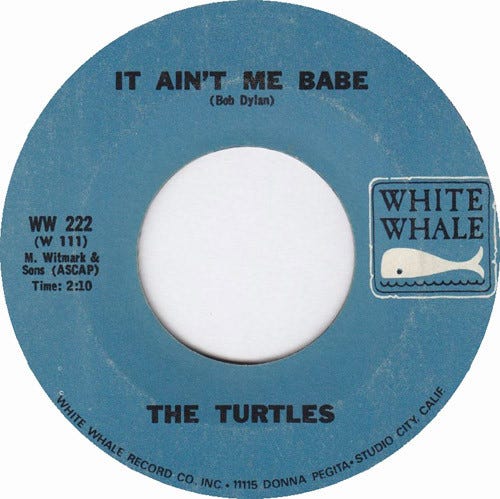
The newly-christened band recorded a cover of Bob Dylan’s “It Ain’t Me Babe,” reframing the song as more angry than plaintive, and in a style closer to that of The Zombies. Released in the summer of 1965, the record prominently featured the new label’s logo, a cartoon Moby Dick floating above the surface of the water.
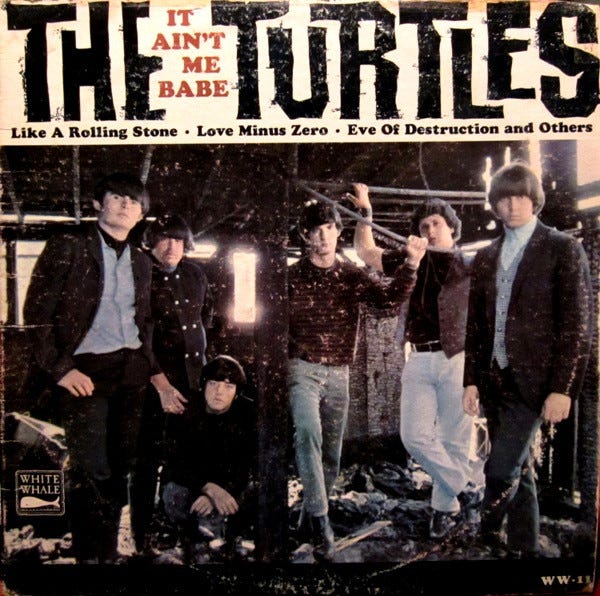
The single was also released on an album by the same name, alongside covers of “Like a Rolling Stone,” “It Was a Very Good Year,” and a handful of originals. The White Whale logo was again stamped on the cover of the record, as it was with every other album by the Turtles and the company’s stable of fly-by-night psych-pop bands.
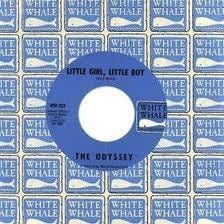
Some of the label’s albums were even issued in sleeves adorned with endless processions of white whale logos, such as the honestly rad psych-rock single “Little Girl, Little Boy” by The Odyssey. (For real, if nothing else at least give this one a listen).
Thanks to a presumably-unaffiliated graphic artist, you can even buy the logo as a nice looking magnet or t-shirt, though you first might want to read up on what predictably happened to the Turtles after “Happy Together” sold a bajillion copies and they gave that contract a ‘business squint.’ There’s an entire documentary on the band free on YouTube which gets into the dire financial straits the band was put into by White Whale Records if you’re interested, but long story short, the band got screwed and broke up without much to their name—not even the rights to their own songs. Similarly, without their big money maker (and other financial mismanagement, to say the least), White Whale Records went bankrupt not long after.
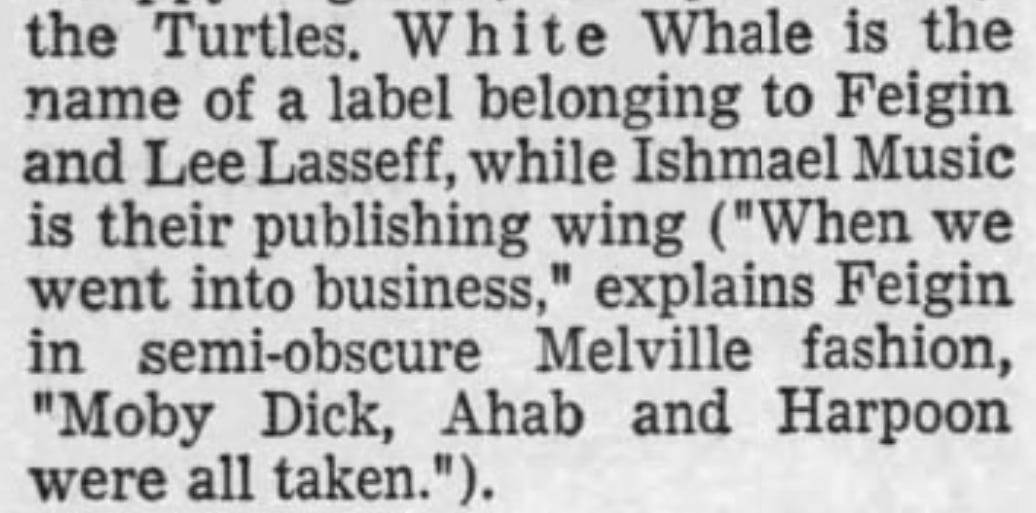
Nevertheless, I was dead set on figuring out why the company was named for Moby-Dick, learning as much as I could about founders Lee Lasseff and Ted Feigin, about the bands and musicians they worked with, including Warren Zevon, Judee Sill, and Frank Zappa, and their careers in the music industry after White Whale Records folded. One nearly relevant find came from a March 1967 article in the Los Angeles Times in which Feigin remarked that they named the company White Whale because “Moby Dick, Ahab and Harpoon were all taken.” The reporter apparently had no further questions.
Alas, Lee Lasseff died in 2013 and the only person I found who might be the right Ted Feigin (now 90 years old) was unreachable. At the risk of upsetting family members I respectfully stopped emailing random Feigins after a few attempts. Then, at last, the barest version of the truth was revealed in a book about another label, The Rhino Records Story: Revenge of the Music Nerds, from 2013, which at the very least IDs which member of the label duo was the Melvillean.
Lee Lasseff and Ted Feigin… had worked as record promotion men, for Liberty and London, respectively. They didn’t have a name for their label yet, but wanted to sign the Crossfires. They were impressed with the band’s cover of the Byrds’ (Bob Dylan-penned) “Mr. Tambourine Man,” which was then in the top ten…. Lee and Ted thought that folk rock would be big, and they wanted the group to record another of Bob Dylan’s songs to release as their debut single.
It was nice to have the interest, but realistically, this wasn’t an offer from one of the established labels. The new label was named White Whale because Ted Feigin loved Moby Dick. He named the publishing company Ishmael after the book’s protagonist sailor, and a later publishing company, Pequod, after the whaling ship. Lee and Ted’s interest was a way for the band members to postpone giving up the rock ‘n’ roll dream and assuming adult responsibilities.
Blink and you miss it, but there it is. Feigin even named another publishing company later in his career after the Pequod. It’s unfortunate that Feigin and Lasseff were such shady characters in the end, but from now on whenever you hear “Happy Together,” or Judee Sills’ “Lady-O” (first recorded by The Turtles), or the vaguely familiar “All Strung Out” by sibling duo Nino Tempo & April Stevens… think of it as yet another excuse to tell everyone within earshot about 1960s psych rock’s unexpected connection to Moby-Dick.
Captive White Whales
When you start searching newspaper archives for keywords related to Moby-Dick and this various interests of this blog, you’ll inevitably come across unrelated hits which nevertheless open up a whole new can of worms—not to mention dozens of new browser tabs. It’s part of what’s kept this blog going for nearly two years.
Such was the case for an ad I found in Brooklyn’s Kings County Rural Gazette from August 25, 1877. What I was initially looking for I don’t recall, but just imagine how high my eyebrow arched when I spotted the Coney Island Sea Side Aquarium and Zoological Garden announcing its “LIVING WHITE WHALE,” not to mention Mrs. Benjamin and her Nine Wonderful Performing Dogs.
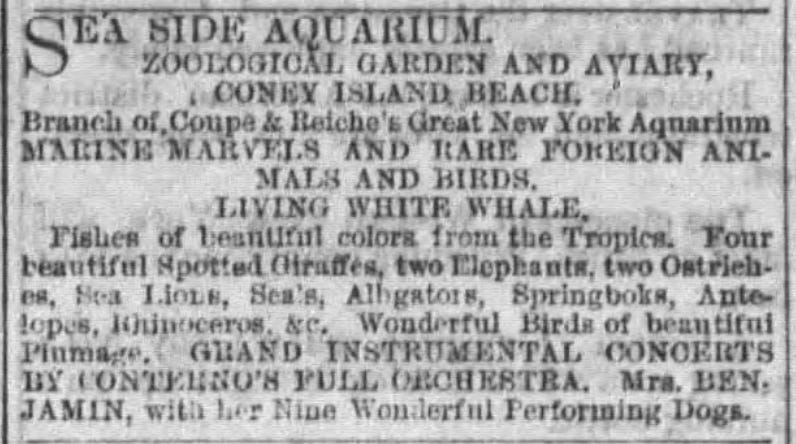
I had a pretty good idea of what was going on, but it was worth checking to see if this was some quaint 19th century scam or, as it of course turned out to be, the sad story of some unlucky beluga whales. I couldn’t help but wonder if Melville ever scanned the newspaper with a shock of recognition at these two words which have since become inextricably linked with his entire personhood. Did he feel mocked by the friendly, relatively petite white whales so easily held captive in a glass enclosure? What would he have thought of children tapping on the tank and making faces at a white whale, his indomitable, supernatural leviathan?
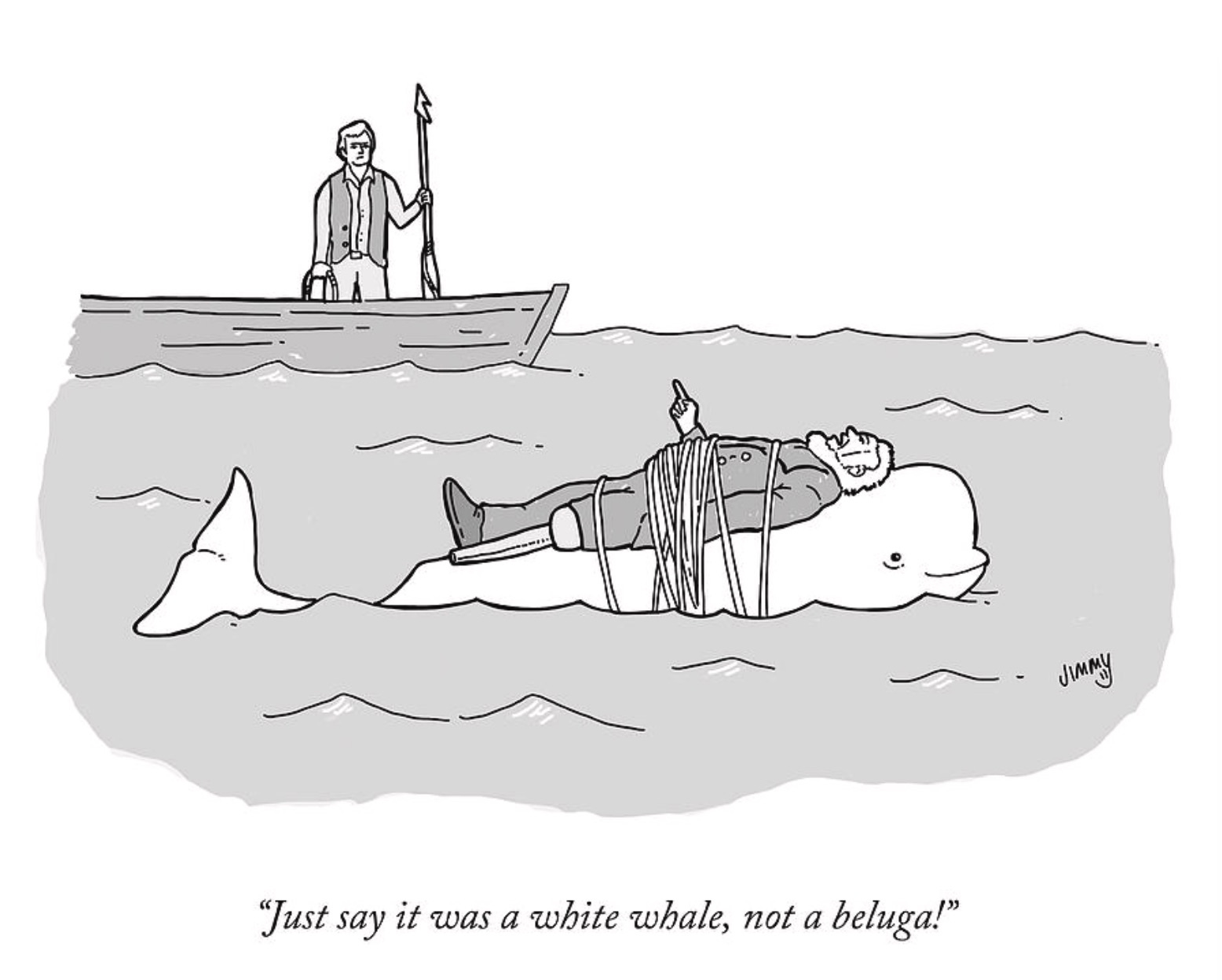
It’s unlikely that Melville ever personally encountered a beluga in their natural habitat around the Arctic circle; his voyages on the Acushnet, Lucy Ann, and Charles & Henry whalers stayed put in the South Seas. If he read about them in Scoresby, who noted that they’re often called “white whales,” he didn’t bother to include this information among their Octavo and Duodecimo brethren such as the narwhal, possibly concerned this somewhat lessened the gravitas of “The Whiteness of the Whale.” (Their name in fact comes from the Russian word “bieluha” meaning white). Still, I couldn’t help but wonder if he ever stood there face to face with a living white whale behind a thick glass wall, and it turned out he had plenty of opportunities.
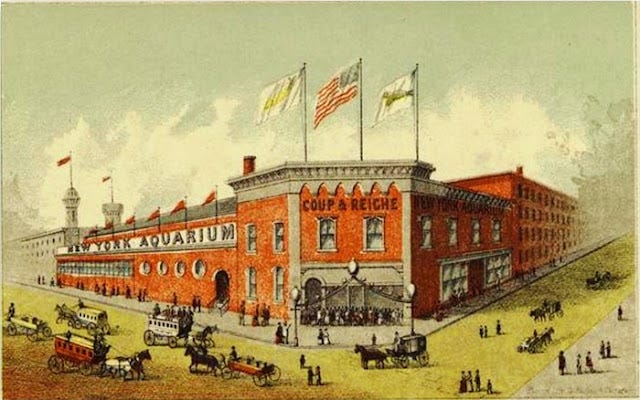
I began with that “Sea Side Aquarium, Zoological Garden and Aviary,” which I learned was the Coney Island outpost of the short-lived Great New York Aquarium in Manhattan. Opened in 1877, the aquarium was home to all kinds of animals from around the world, including hippos, seals, sea lions, tropical fish, and even chimpanzees and orangutans. Its main attraction, though, was a real live beluga whale caught and transported to New York by Captain Zack Coup. These were among the first leviathans (in miniature) ever held in captivity, and you can imagine the excitement of seeing one in person in midtown Manhattan.
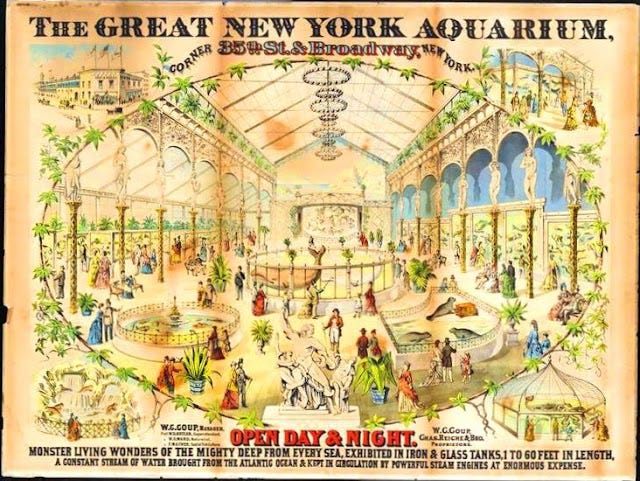
That said, while the word “aquarium” might lead you to believe the exhibit was the work of well-meaning scientists and educators, Captain Zack was actually the brother of W.C. Coup, a pioneer of the railroad circus, shipping carnivals, sideshows, and museums across the country via railcars. In 1870, Coup partnered with P.T. Barnum to put together “P. T. Barnum’s Grand Traveling Museum, Menagerie, Circus and Hippodrome” but a few years later was back in New York helping to launch the Great New York Aquarium with Charles and Henry Reiche, German bird and animal dealers.
Barnum had already experimented with exhibiting belugas in previous ventures, and Coup in learning the tricks of the trade must have insisted on procuring his own. But per a visitor guide printed in 1877, “there were innumerable difficulties and dangers to be met and overcome” in the capture of the aquarium’s first two belugas. The team led by Coup’s brother traveled by sleigh along the St. Lawrence River into remote parts of northeastern Canada, finishing the last segments on snowshoes. When they finally found their white whales they snared them “entirely free from injury” and then escorted them back to New York by schooner, rail car, and steamship in giant boxes.
As an aside, it does seem that belugas apparently are quite easy to catch. This short documentary from 1968, “Beluga Days” (Le Beau Plaisir in the original French), shows how they swim right into simple figure-eight enclosures and get stuck swimming in circles. That said, I’d recommend stopping after the first four minutes of the video unless you want to find out what these particular fisherman had planned for the poor whale.
The first two whales were brought to the main aquarium in Manhattan, less than a mile from Melville’s house on East 26th Street. His thoughts were likely far from whales, having recently self-published Clarel, an 18,000-line epic poem about the title character’s pilgrimage through the Holy Land. For others, their arrival was an “occasion of great excitement and curiosity,” per the visitor guide—slyly scampering past the fact that excitement and curiosity was all there ever was. When the 65,000 gallon round tank housing the whales was filled to the top with water in advance of their big public reveal, the glass burst and flooded the aquarium. Though Coup downplayed the incident in the New York Tribune, both belugas died, one of which seems to have been impaled on a piece of the iron frame. (Several employees were also seriously injured as well).
Captain Zack was thus sent to trudge once again through the snow to capture two more belugas, this time brought to the Coney Island outpost ahead of its own grand opening in May 1878. They arrived in rough shape by their own admission, carried to the finish line by a team of 24 men and “rolled in over thick layers of sea-weed.”
Two big boxes, each containing one whale, were carefully carried inside by twenty-four men, one of the sides of each box was knocked out, and the animals were rolled in over thick layers of sea-weed. Before they were placed in the water, they behaved as quietly as a turtle nailed to the deck of a ship. They breathed regularly through the big spouthole on the upper end of the head, but neither opened their mouth nor moved their tail or fin, and the big, unwieldy body looked almost like a corpse. The grayish-white skin was scratched and torn in many places, and a look both at the big animal in its narrow box and at the gang of rough, weather-beaten men that formed its escort plainly told of the hardships and fatigues which they must have undergone.
The whales allegedly bounced back after being transferred to the tank and fed copious amounts of live eels, “spouting vigorously” for staff and the gawking public. And they lived happily ever after, seeing out their natural lifespan of 35-50 years.
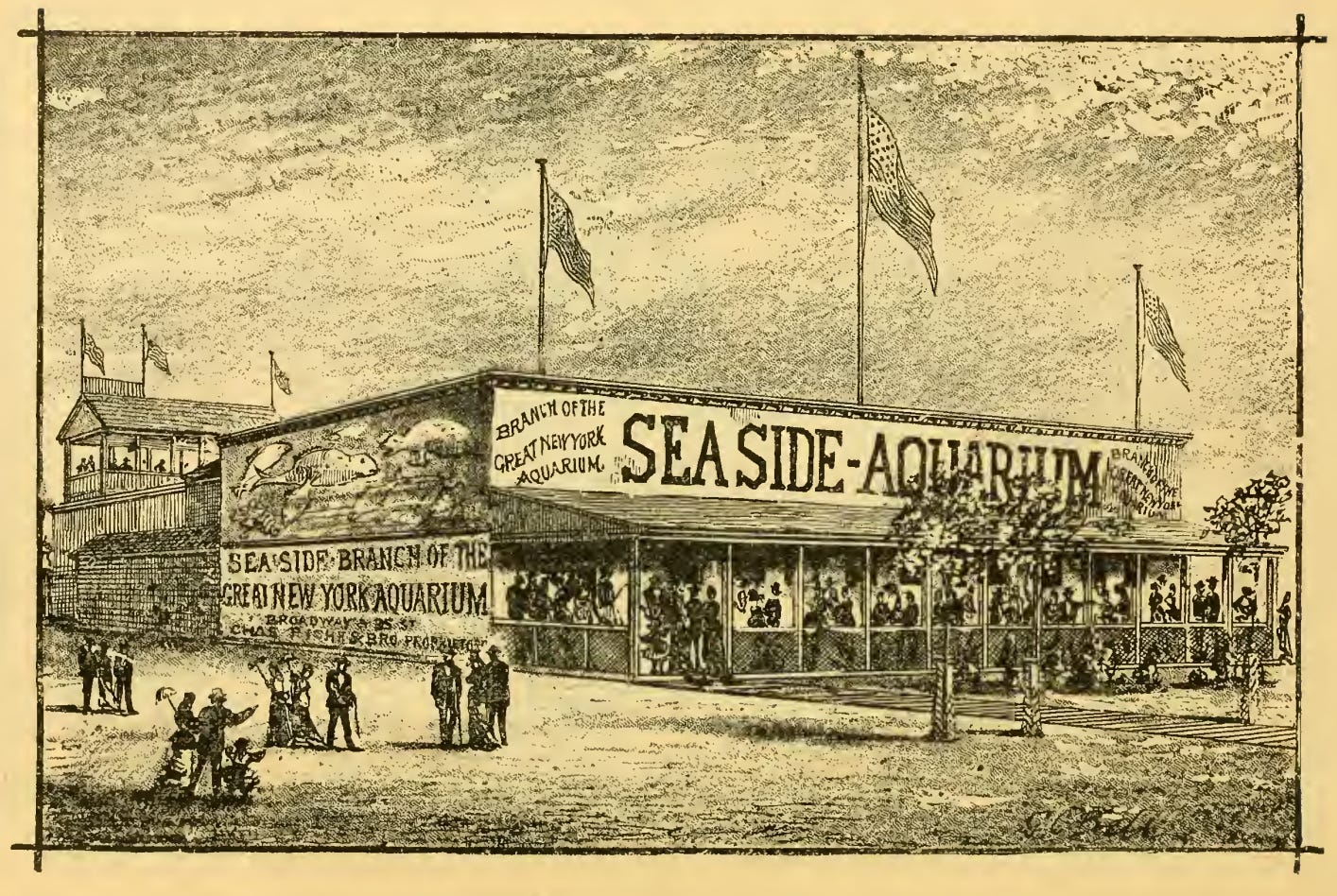
Ah, if only that were true. Many years later, aquarium superintendent Frank Mather spilled the beans about the operation in Popular Science magazine, copping to all of W.C. Coup’s circus tricks. On the more harmless side, for example, is that the belugas were said to be 20 feet long in the ads littering the city, but were in fact six feet at best—a slight difference which Mather said was quickly noted by the public.
Standing by the tank, I heard strange comments:
“Do you call that little thing a whale? … The papers said it was twenty feet long; I should think it might be six feet, but no more.”
“Well,” answered the attendant, “water is mitey deceivin’, an’ that whale is more’n three times as long as it looks. The fact is, the papers did report it to be longer than it is, for when we drew off the water to clean the tank yesterday we put a steel tape over the whale and it measured just nineteen feet eleven inches and a half.”
The much worse deception, though, was that the belugas were simply unable to survive with such a primitive understanding of their needs. Mather noted that the longest a beluga ever survived in captivity was nine months, though most died after just four or five. The belugas, sad to say, were replaced as readily as parents swapping out their child’s goldfish.
We had many white whales at different times, for the management would keep whales penned up on the St. Lawrence River to replace those which died, and would never show more than two at a time, claiming that they were rare animals and only to be had at ‘enormous’ expense... It would never do to have the public know that they were common during the summer in the St. Lawrence, and when one was getting weak another would be sent down, and the public supposed that the same pair was on exhibition all the time.”
Ultimately, I can’t say I found any reason to believe Melville ever saw any of the perhaps dozens of belugas that comprised a small part of New York City’s population in the late 1800s. He was still a working man patrolling the Hudson River docks for the U.S. Customs House and meanwhile suffering a litany of illnesses and ailments. Confronting a white whale might have been the last thing on his mind. Though, to be fair, he did make a day trip to Philadelphia in October 1876 to visit the Centennial Exposition where he may have spotted the skeleton of a finback whale hanging from the ceiling of one of the buildings.
Still unlikelier was that Melville visited the first ever belugas held in captivity in the United States. Arriving not long after Moby-Dick was published, white whales were part of the opening slate of animals exhibited by the Boston Aquarial Gardens, a venture co-owned by ambrotype inventor James Ambrose Cutting. (The Aquarial Gardens were purchased in 1862 by none other than P.T. Barnum, who obviously knew a profitable spectacle when he saw one.)
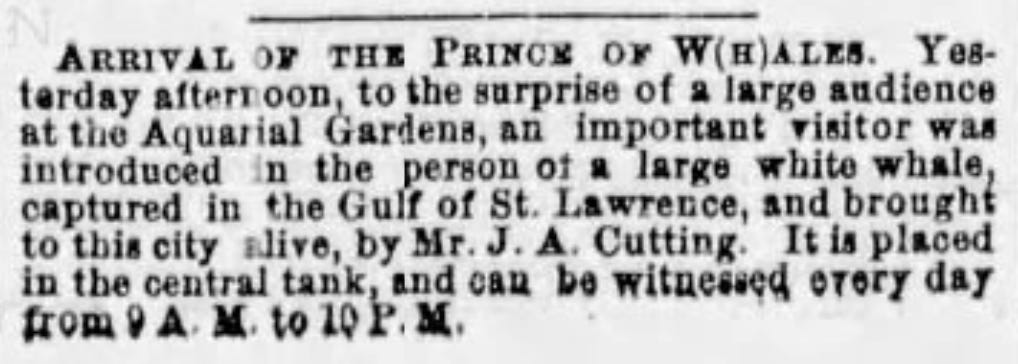
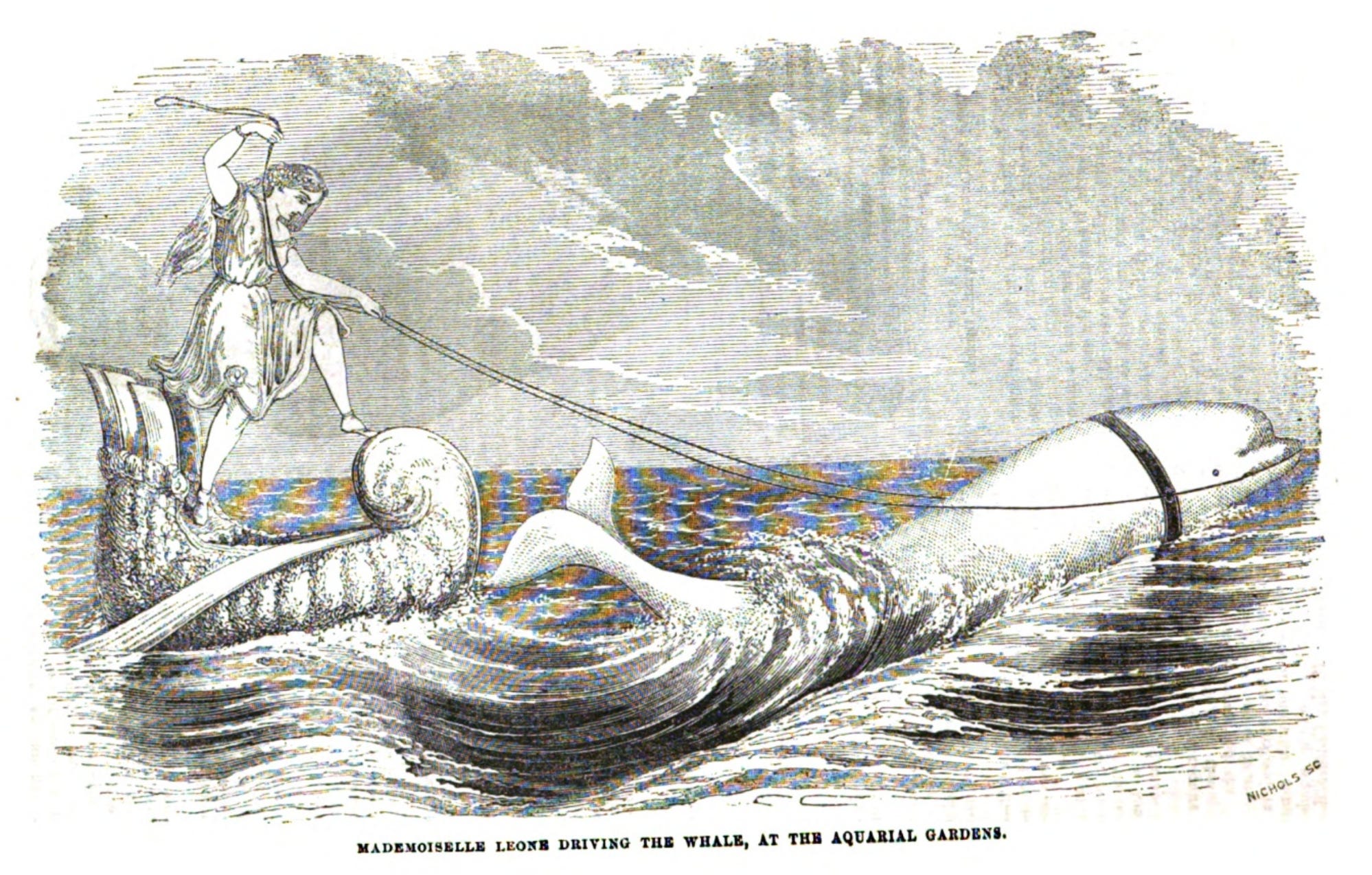
But the reason I bring up this particular example is because I’m obligated to share with you one final, lasting image from this aquarium, a feat described as the “WONDER FEAT OF THE WORLD!” and a “Realization of the Poet’s Dream!” It was, insanely, a woman on a clamshell chariot being dragged around by a beluga.
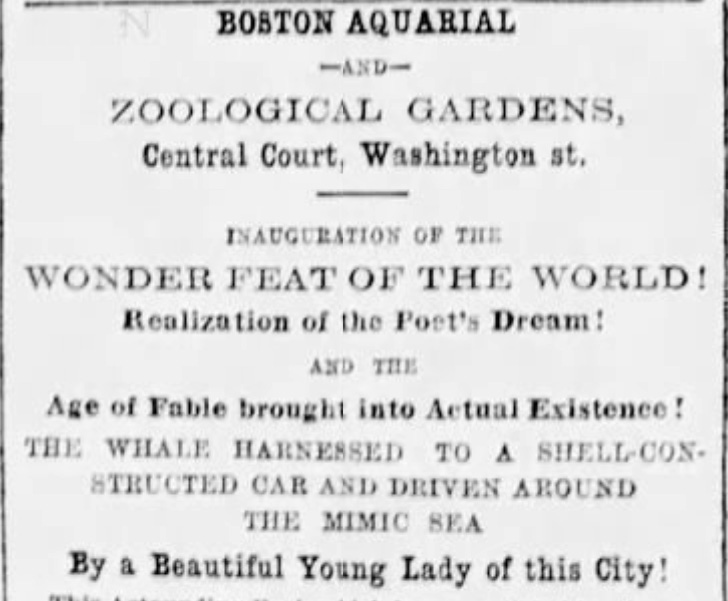
To give you a sense of how demented and ramshackle the whole thing was, consider that the Aquarial Gardens first tried to pull off the stunt with a dolphin. The creature apparently took to the harness well enough but before the show went public the poor thing “died of dyspepsia, it having injudiciously swallowed a number of iron nails that lay at the bottom of the tank.” An article about the gardens in Ballou’s Pictorial remarked: “This was a damper, but why not harness the whale?” Why not, indeed?
The question was considered, and the monster was measured for collar and traces. He took to them both kindly, and a piquant little piece having been written, the services of Neptune and Triton were enlisted, and Mademoiselle Leone, a charming young lady of Boston, boldly entered her boat, and drove the whale as deftly as if he had been the tamest of ponies… No one but a live Yankee would have dreamed of such a thing, or carried it out to a successful issue.*
Do I feel sorry for these poor whales and dolphins, all of whom died early deaths and often in bizarre ways? (Several belugas boiled to death in another of Barnum’s museums in 1865, for instance). Of course. But If you think I was about to hit Publish on this post without an illustration of a woman on a fairy boat pulled by a whale… you’re out of your mind. And you’re welcome.
If that wasn’t enough for you, 12-year-old Sarah Gooll Putnam, who would later become a noted painter, visited the Aquarial Gardens in February 1862 and recorded it in her diary along with a sketch.
In the evening I went again to the Aquarial Gardens, and there we saw the whale being driven by a girl. This was in a boat and the whale was fastened to the boat by a pair of rains [sic] and a collar which was fastened round his neck. The men had to chase him before they could put on the collar.
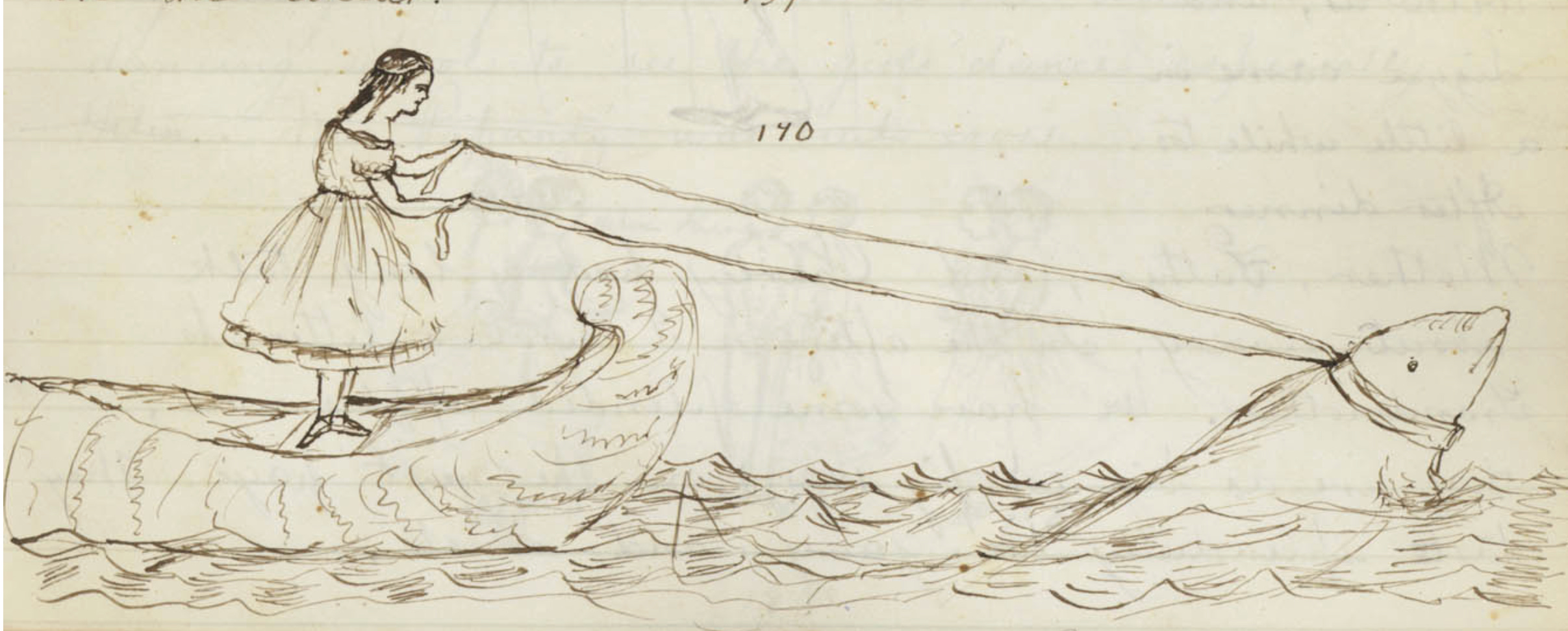
I realize we’re now far from the realm of Melville, but I’ll leave you with a reminder that this wouldn’t be the last time a beluga whale was ever fitted for a harness. You may recall a story from May 2019 in which Norwegian fisherman encountered a beluga wearing what appeared to be equipment to mount a camera, labeled “Equipment St. Petersburg.” After the harness was removed, the beluga continued to hang around the fisherman, indicating it was used to being around humans. Many speculated that whale had been trained as a spy by the Russians, known to have trained other mammals for that porpoise purpose. The public subsequently voted to name him Hvaldimir, a portmanteau of hval (meaning, as we can deduce, “whale” in Norwegian) and Vladmir, for Vladmir Putin.
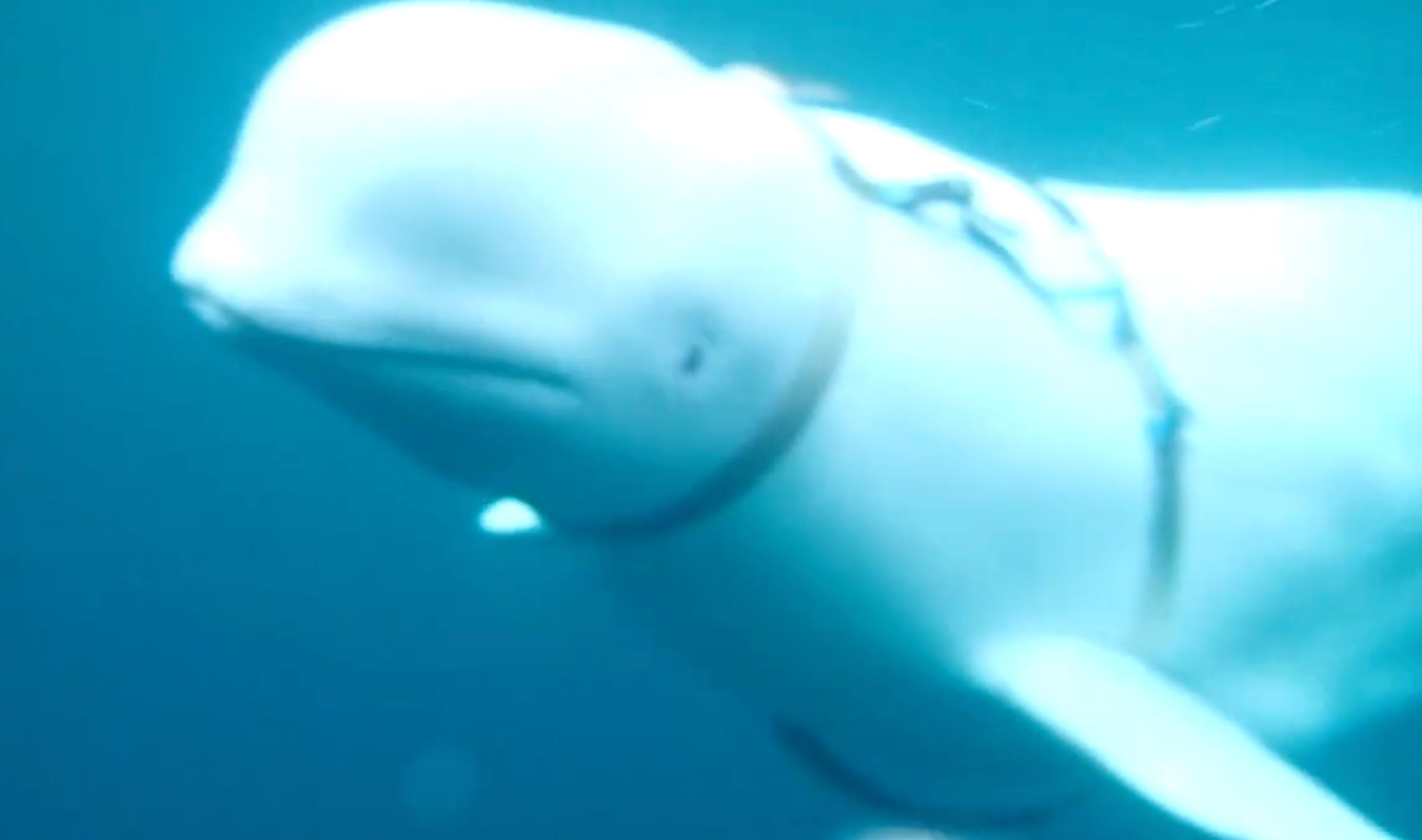
Hvaldimir was eventually set free and seemed to live a normal life in Norwegian waters until 2024, when he too was suspected of having died under bizarre circumstances much like his imprisoned ancestors. When his body was found floating in the bay of Risavika, off the southwestern coast of Norway, animal rights organizations filed a police complaint alleging that he had “multiple bullet wounds” in his body. However, a later autopsy performed by a Norwegian veterinary institute found no evidence of bullet holes or projectiles, instead blaming his death on a 14-inch stick found lodged in his throat… which might be relevant to the case?
In any case, Captain Ahab could not be located for comment.
Nice one. I hope you keep at it. By the way, "White Whale Records" reminds me of a book by Richard Price entitled simply "The Whites". The title conveys the idea that detectives in the book each have a quest to solve their own "White Whales": cases they are obsessed about. Maybe more rabbit holes...
I wonder if, in your research into belugas in captivity, you ran into any early attempts to transport larger live whale species, or at least any attempts to solve the logistics of doing so? I'm not trying to get you to do my research for me, it would just be very convenient if you already did.